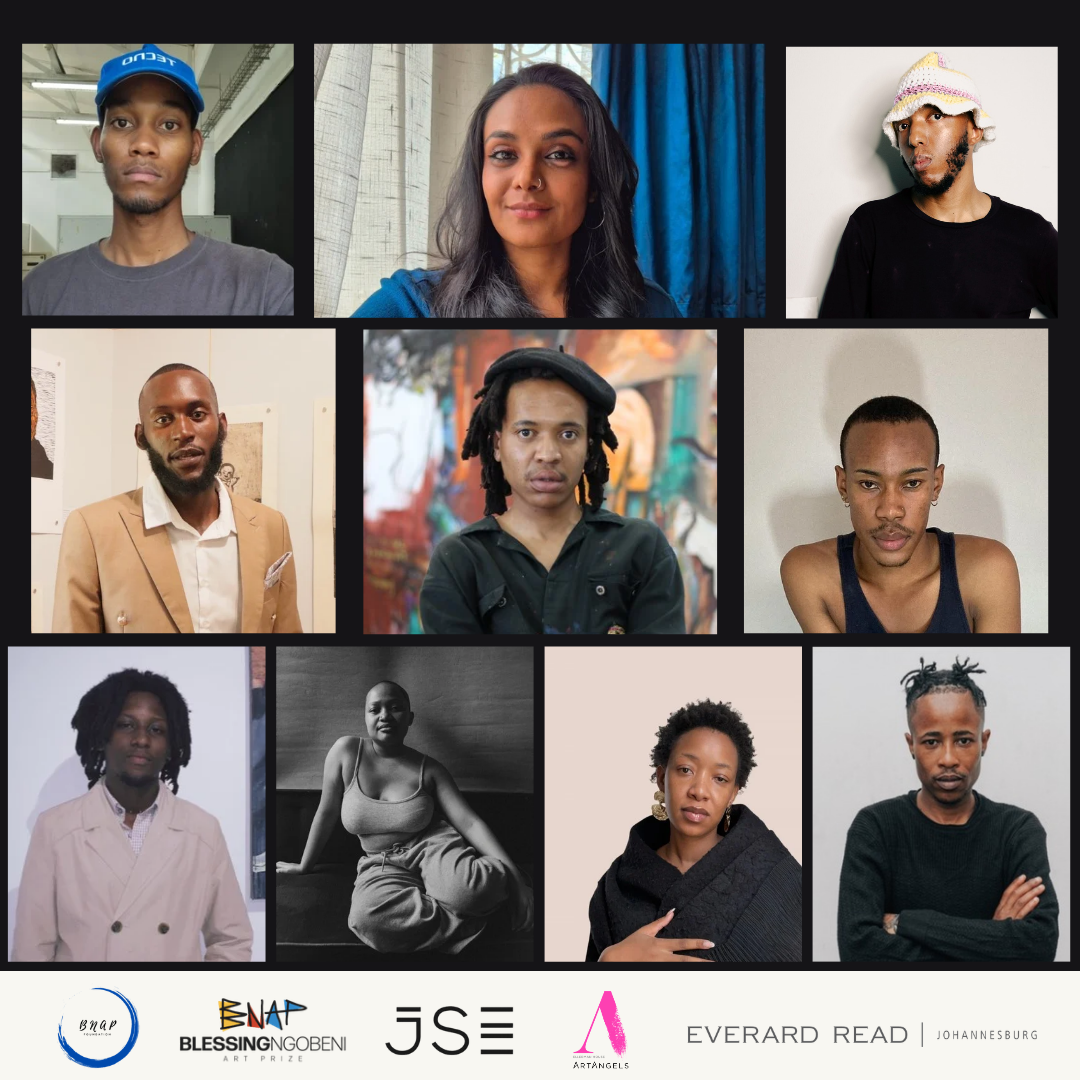
Introducing the 2026 Blessing Ngobeni Art Prize Finalists! We are thrilled to officially present the Top 10 artists who have been selected for this year’s Blessing Ngobeni Art Prize. The level of talent, creativity, and dedication we’ve witnessed has been nothing short of extraordinary. These ten individuals represent a powerful new wave of artistic vision, and we are incredibly proud to celebrate their journey and their work.
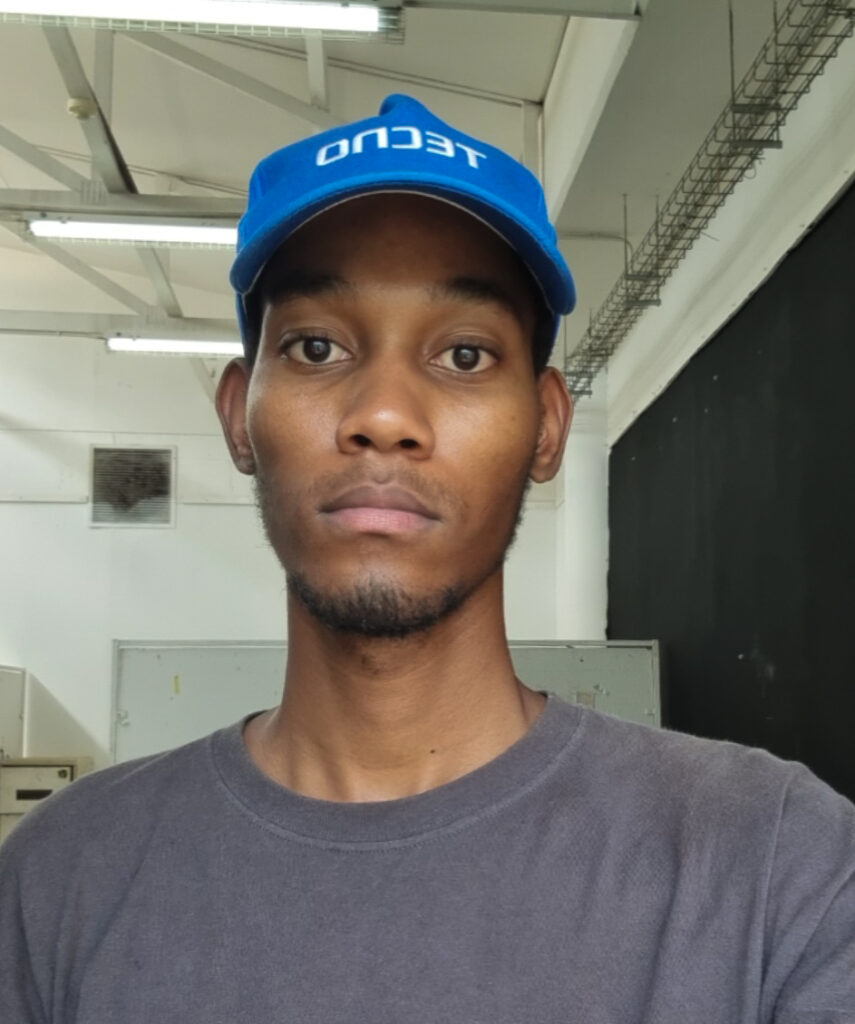
Andries Mpho Moroaswe
(b. 2002) is a visual artist and printmaker born in Mashite Village, Limpopo, and currently based in Pretoria. He holds a Bachelor of Arts in Visual Arts from the University of Johannesburg (UJ), where he honed his technical voice under the mentorship of prominent South African figures, including Diane Victor, Gordon Froud, and David Paton.
Moroaswe’s practice serves as a counter-narrative to the fast-paced contemporary moment, focusing instead on the quiet residues of history found in domestic spaces and abandoned labour spaces. His work documents the strict routines and labor of the apartheid generation, utilizing a labor-intensive process of dip-pen drawing and screen printing on handmade hemp paper.
By reclaiming materials historically associated with restriction, Moroaswe archives oral histories and generational memories before they fade with time. He has exhibited at the Stokvel Gallery and Wits Book Arts Centre, and was recently selected forFlesh and Façade at Candice Berman Contemporary (2025)
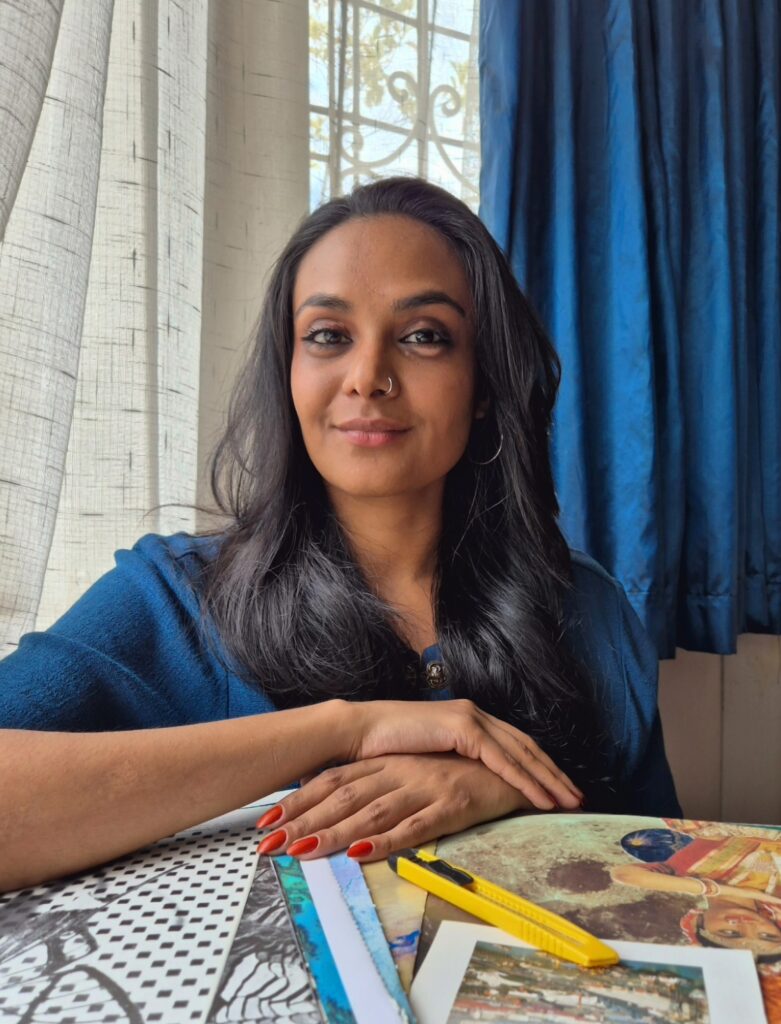
Drashti Naik
is a self-taught collage artist from Bulawayo whose work is guided by images in discarded books that she cuts out and recontextualises into surreal landscapes. She is a 3rd-generation Gujarati-Zimbabwean woman whose lived experience informs her works. She explores the ways diasporic populations relate to different contexts, developing themes of alienation, adaptation, and belonging.
Her practice is existential and philosophical, reflecting on individual and collective experiences of longing for connection whilst separated from community.
She delves into the multifaceted nature of existence and how people simultaneously fit, misfit, forcibly fit, and don't fit in the world they inhabit. Her collages embody the textured modes of existing and navigating various uncertain environments. By combining unrelated elements, her work displays the intricate contradictions of inner lives experiencing the physical world; areas in need of exploration to chart self-discovery.
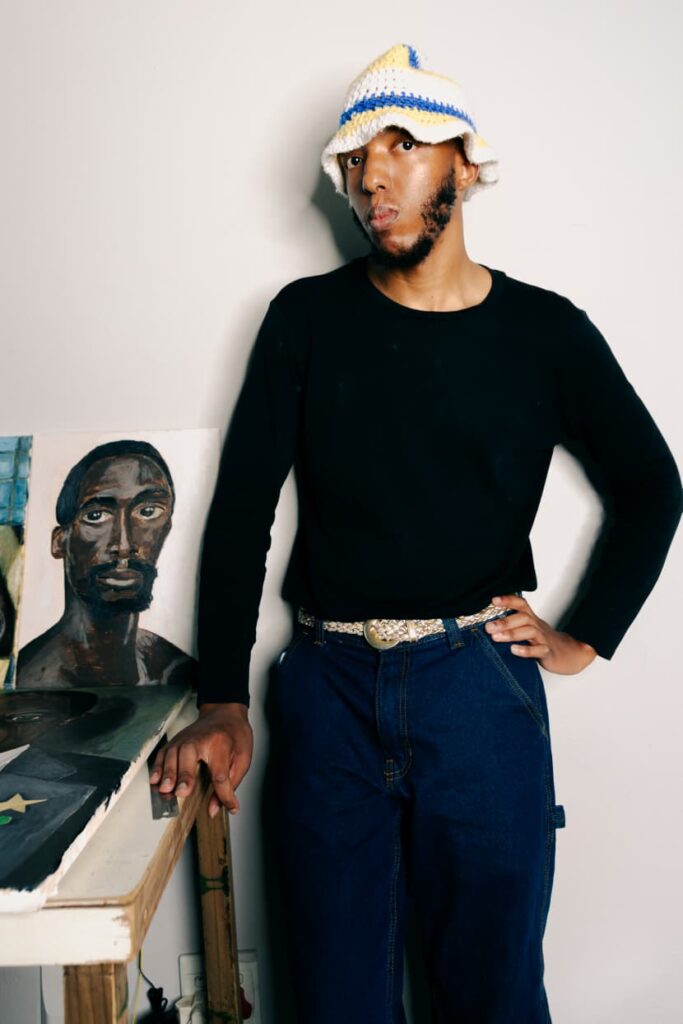
Jakinda Boya
(b. 1995, Johannesburg) is a multidisciplinary artist whose painting practice examines social and psychological decay through the human body. His work treats the figure not as a symbol of identity but as a site where pressure, interiority, and endurance surface. Raised in post-apartheid Johannesburg, Boya's work is informed by the city's visible contradictions - resilience alongside neglect, intimacy alongside instability. Rather than working from direct autobiography, he draws from memory, observation, and repetition, allowing figures to emerge as distilled psychological states rather than portraits of lived experience.
Boya's paintings often depict men in moments of fatigue, containment, or collapse.Bodies appear defensive, withdrawn, or spent, rendered through surfaces that suggest erosion, wear, and time. Decay functions not as deterioration alone, but as evidence - a trace of survival under sustained pressure. His process combines acrylic and oil paint. Acrylic allows for speed, restraint, and compositional decisiveness, while oil offers density, texture, and emotional depth. Moving between these materials introduces friction into the work, mirroring the psychological tension embedded in the figures.
Boya's work has featured in curated exhibitions, art fairs, and editorial platforms. Alongside painting, he has a background in music, which continues to inform his sensitivity to rhythm, pacing, and mood. He lives and works in Johannesburg.
Boya's work has featured in curated exhibitions, art fairs, and editorial platforms. Alongside painting, he has a background in music, which continues to inform his sensitivity to rhythm, pacing, and mood. He lives and works in Johannesburg.
James Ndlovu
is a Johannesburg-based visual artist of African heritage, currently residing in Kempton Park. He is a printmaking artist trained at Artist Proof Studio, where he completed his studies and a four-year internship programme. His artistic practice is rooted in painting and printmaking, engaging with themes of identity, heritage, and migration through process-driven and material-based approaches. Ndlovu has participated in several group exhibitions,
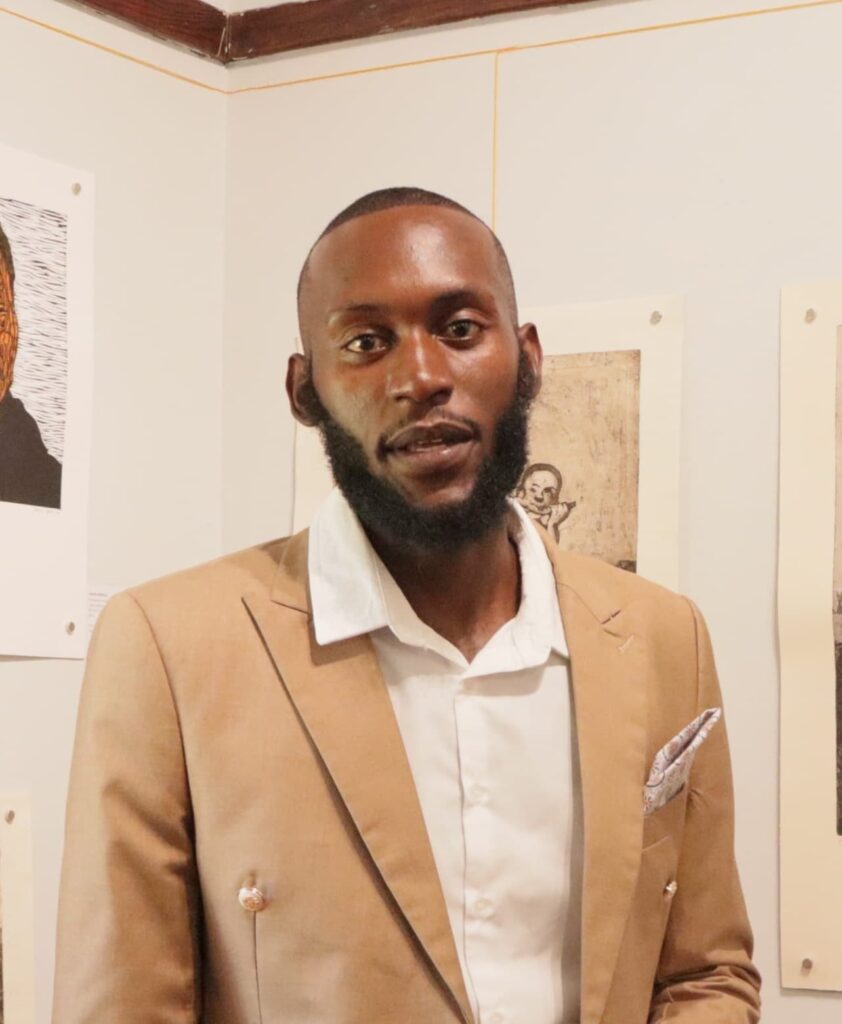
including the Artist Proof Studio Third Year Exhibition, August House group exhibitions, the University of Johannesburg’s FADA Gallery, and the Investec Cape Town Art Fair 2025. His work has been recognised with the Umsizinopende People’s Choice Award, acknowledging both public engagement and artistic merit. As an emerging artist, Ndlovu continues to develop a research-led practice that reflects on personal and collective histories within a contemporary South African context.
Kamogelo Mosehla
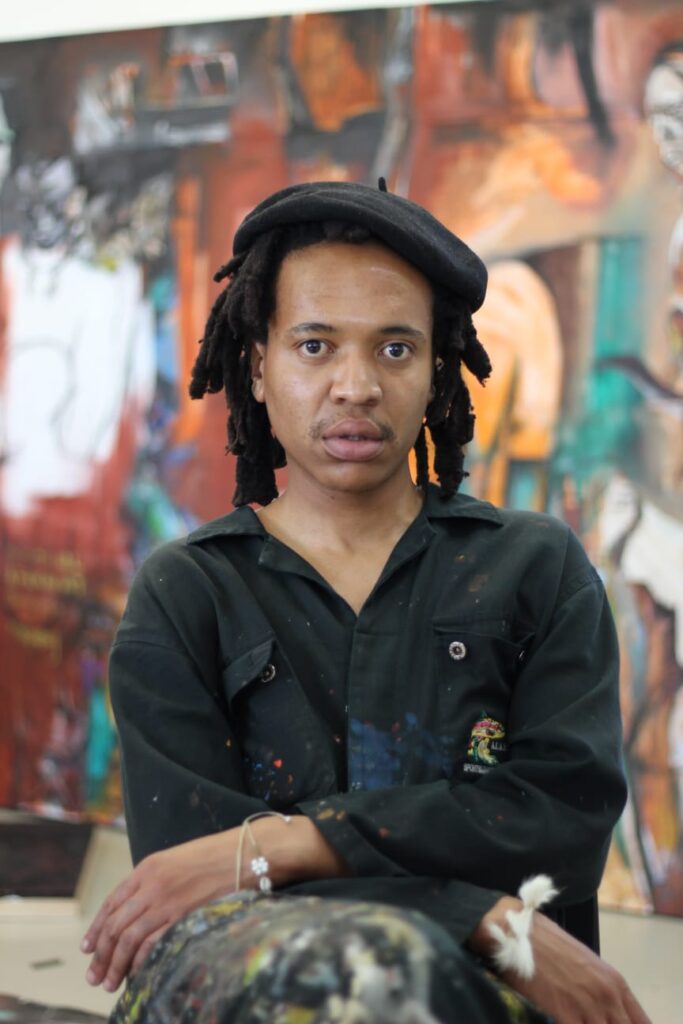
(born in Benoni, South Africa) is a visual artist whose practice is rooted in process-based exploration and an ongoing engagement with improvisation as a method for making common cause with the brokenness of being. Raised in the township of Daveyton, the social, cultural, and sonic textures of this environment played a formative role in nurturing his creative curiosity and continue to shape the themes that animate his work.
Mosehla’s practice is informed by personal and collective histories of dislocation. As a young, emerging artist, his creative process evolves in continuous dialogue with his academic research,
community influences, and sustained engagement with contemporary South African art discourse. This interplay between lived experience, intellectual inquiry, and aesthetic experimentation forms the core of his artistic language and ongoing visual investigations.
Kgothatso Mokale
(b.1999) is a textile artist and designer based in Pretoria, South Africa. They graduated from Tshwane University of Technology (TUT) with a Diploma in Fine and Applied Arts, majoring in textile design and surface application. Their work explores queer visibility and presence through textiles, using materials such as leather, denim, and stockings to evoke the textures and sensations of skin. Femmeiko’s art often reclaims words and symbols historically used to shame queer identities, transforming them into sites of empowerment, defiance, and beauty.
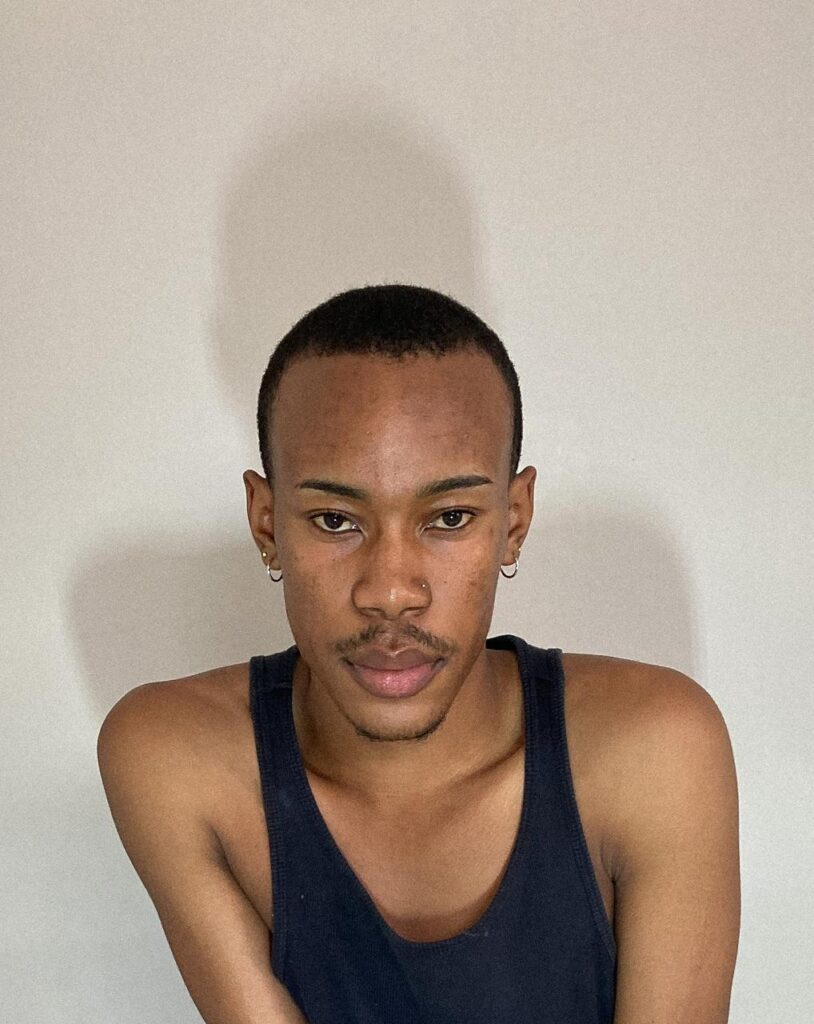
Through a tactile language of printing and layering, their practice confronts and celebrates the lived experience of being queer not as something acquired, but as something born into the body. Femmeiko has participated in group exhibitions with fibre and surface design collectives in Pretoria, showcasing works that challenge gender norms and affirm queer existence within material culture.
Khakhalethu Gxiya
(b.2002 -) is a young visual artist from eKomani, in the Eastern Cape. He is a recent Bachelor of Fine Arts graduate from Rhodes University. His upbringing in the Eastern Cape contributed to his Xhosa and Christian influences, which inform the central ontological insight in his work that reality is liminal - comprising material and spiritual dimensions.
In his paintings, which he renders in oil paint, Khakhalethu sets up this liminality as the condition through which he interrogates his concerns of time, space, identity, representation, history, process, and consciousness. Khakhalethu often thins down the paint and works bodily to highlight and investigate the materiality of paint itself.
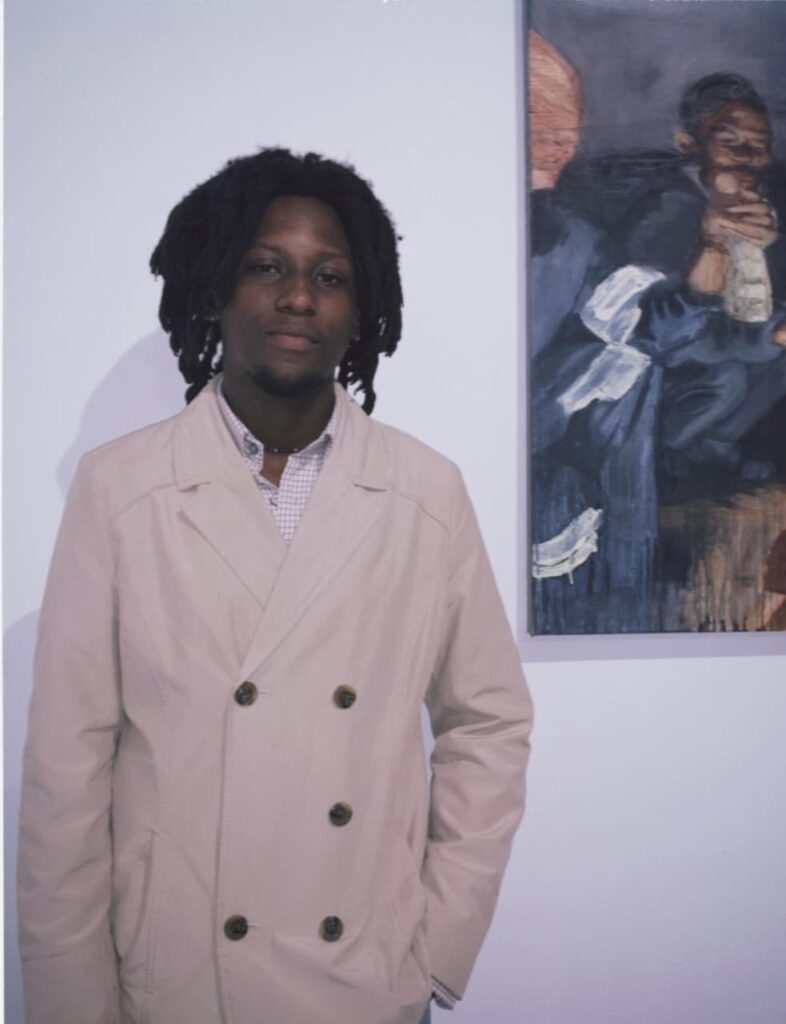
His surfaces are gestural, ethereal, with a variety of marks ranging from thin to thick. Khakhalethu has participated in the National Arts Festival students’ exhibition for 3 consecutive years. He has also been a part of the local art ecosystem, featuring in Inward Inbound, curated by Ofentse Links. Furthermore, he was a finalist in the Lithuba Lakho competition for young emerging artists in the Eastern Cape, with the exhibition taking place at the Nelson Mandela Metropolitan Art Museum.
Sagwadi Mohlabi
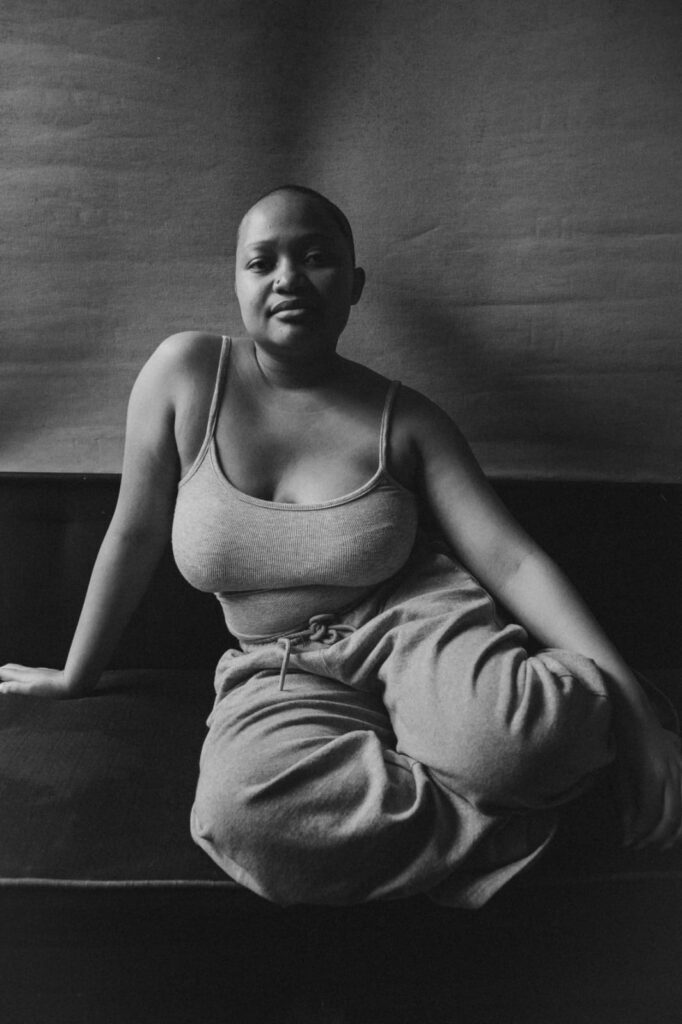
(b. 2002) is a South African self-taught textile artist based in Johannesburg, working primarily in punch-needled tapestry. Her practice investigates joy, dance, and play as central forms of resistance within black womanhood, drawing on the gestures, movement, and expressive presence she observes in everyday life. Through her work, Mohlabi captures dance not only as physical movement but as embodied outward presentation, distinctive speech, and the customised claiming of space—key elements she interprets as deliberate acts of identity-making.
Working with tactile texture, fluid silhouettes, hand-written text, and a bold colour language, she explores how black women continually shape and affirm their identities through intentional stylistic and spatial choices.
Silindokuhle Shandu
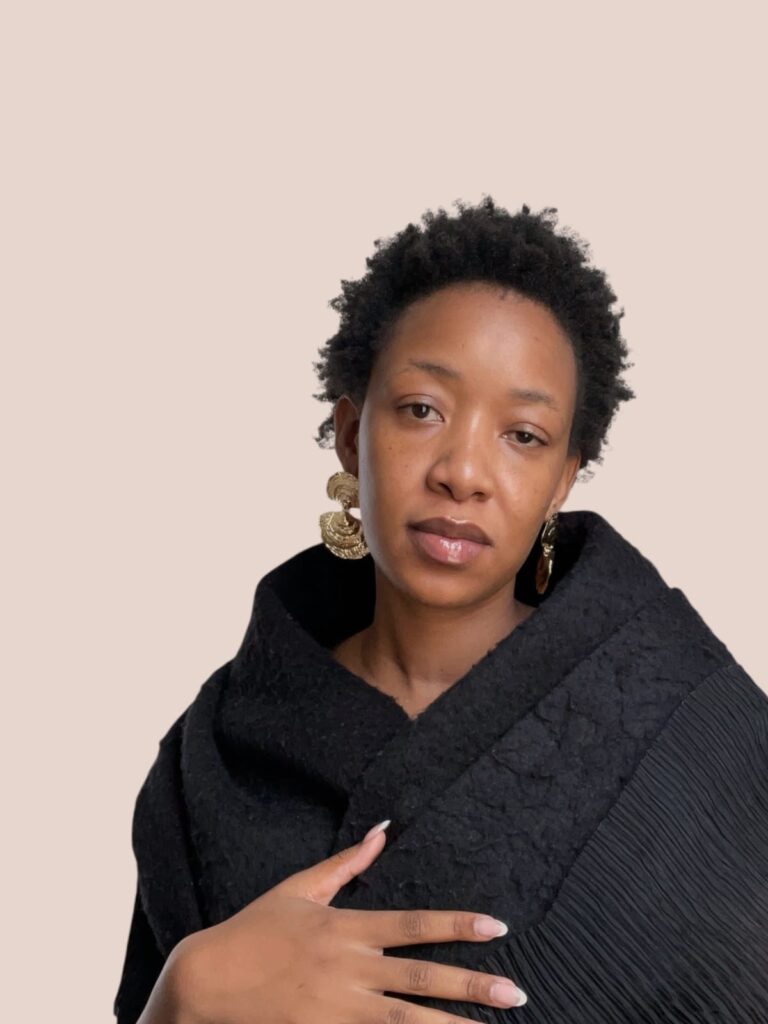
(b. 1998) Johannesburg-based artist Silindokuhle Shandu explores identity, womanhood, and lived experience through photography, painting, and mixed media. Raised between Gingindlovu, Empangeni, and eMalahleni, her work reflects the tension between urban, suburban, and rural life. A 2024 ANNA Award Top 12 finalist, she holds a diploma in Fashion Design and Technology and is an alumna of the AFAMP Girl Child Mentorship Programme and the 2025 Bodhi Khaya Residency.
Shandu has exhibited in Eye Am a Woman (Clubhaus, 2025) and People and Place (Art School Africa, 2025/26). Her work captures the nuances of her experiences, largely shaped by the women who raised her. Through her use of color, texture, and composition, Shandu invites viewers to explore the tension between belonging and otherness, familiarity and the unknown.
Siyambonga Magwentshu
Born in Kokstad and raised in Mt Frere, Siyambonga Magwentshu developed an interest in art from an early age, beginning with drawing in primary school. Coming from a rural background with limited access to art resources, he learned to create using what was available around him. What began as a hobby later evolved into a committed artistic practice.
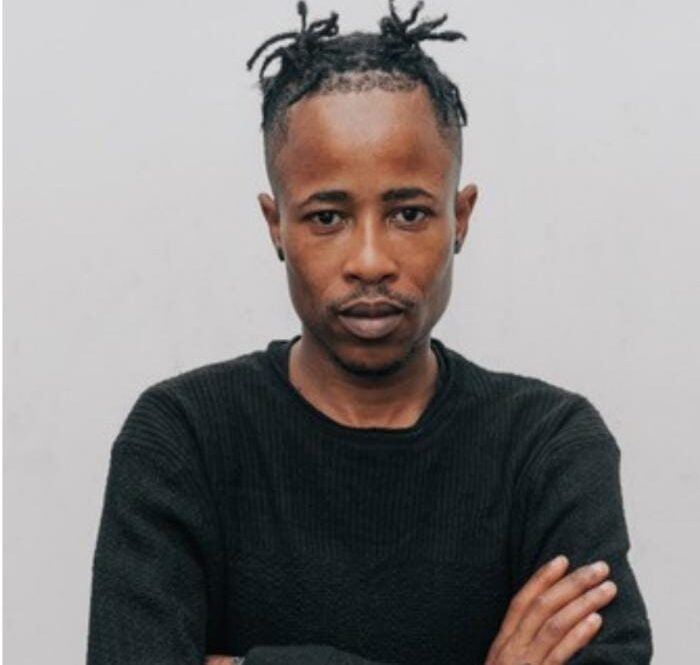
His work is rooted in community life and personal experience, addressing themes of identity, struggle, resilience, and social reality. Working mainly with drawing and painting, Magwentshu uses expressive figures and layered imagery to tell stories that reflect lived experience. His practice contributes to broader conversations within contemporary South African art by giving voice to underrepresented perspectives